
Legendary Frames — Todd Hido
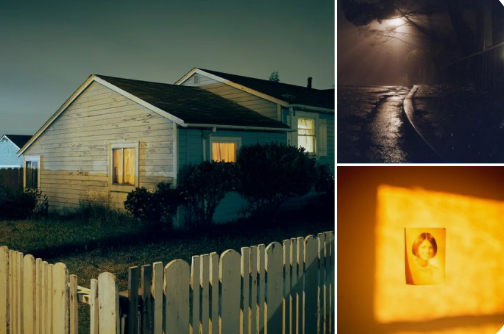
Todd Hido is a photographer whose work has quietly reconfigured how we think about light, space, and the emotional charge of the everyday. Born in 1968 in Kent,Ohio, Hido studied photography at the Cleveland Institute of Art and later at California College of the Arts.
Over three decades he has built a body of work that moves between documentary, portraiture, and cinematic landscape, obsessively exploring domestic spaces, suburban margins, and the charged atmospheres that inhabit them. His images—often of houses at night, empty streets, and ambiguous interiors—feel both intimately specific and broadly resonant, like memories half-remembered and scenes waiting for stories to arrive.
Hido first gained wide attention with his series of nocturnal house portraits: photographs of suburban exteriors lit from within, soaked in rain, or veiled by fog.
These images are notable for their controlled stillness and the way they translate interior life into external clues—curtains drawn, warm window light, a lone car. He pares away overt narrative detail, but imbues each frame with a sense of psychological possibility. The viewer becomes a co-author, asked to invent the circumstances behind the glow or the isolation. That interplay between suggestion and inference is a throughline of Hido’s practice.
Technically, Hido’s images are studies in craftful restraint.He frequently uses available light, long exposures, and film and digital processes that enhance grain and colour shifts to produce a cinematic, slightly uncanny aesthetic.
Colour is a tool: muted greens, amber glows, and deep blues create emotional temperature. Tonal control, soft focus at the edges, and careful framing keep the eye moving while holding attention on ambiguous centres of interest. The result feels like mood made visible—dense, suggestive, and carefully orchestrated.
For street photographers, Hido’s work offers several portable lessons. First: mood matters as much as subject. Hido proves that atmosphere can be the primary subject, and that cultivation of light and tone can convert an otherwise ordinary place into a scene that feels charged and editorial. On the street, this means prioritising conditions and timing—seeking fog, reflections, late light, or the interplay of neon and shadow—to let mood drive the image rather than forcing narrative solely through gesture or event.
Second: implied narrative is powerful. Hido avoids literal storytelling, instead arranging clues that invite the viewer to fill in backstory. In street terms, look for fragments—a turned head, a discarded umbrella, a closed shop with single lit window—that suggest action beyond the frame.
These hints can create suspense and emotional engagement without staging or exploiting subjects.
Third: light as character. Hido’s masterful use of available light—interior windows, streetlamps, headlights—treats illumination as an actor in the frame. Streetphotographers can borrow this approach by seeing light not just as exposure but as a defining element that shapes mood and hierarchy. Learn to wait for or subtly manipulate light: angle, reflection, silhouette, and shadow become narrative tools.
Finally: restraint and editing. Hido’s images are spare and intentional; he edits away distraction. For street shooters that translates into patience and selection—making single fewer, more considered images, and trusting the power of implication over exhaustive documentation.
Todd Hido’s photographs are not lessons strapped to a manifesto; they are invitations to slow down, listen to the scene, and let mood and light do the storytelling. For any photographer working the streets, his legacy is a reminder that composition and timing are vital, but it is the quiet orchestration of atmosphere, subtle detail, and implied narrative that often makes an image unforgettable.
Please show us your support by subscribing for exclusive access to our digital photography books and monthly eZines, which includes our top 20+ shots of the month. If you’re a street photographer, why not collaborate with us? Send us your ten best shots for a chance to be included in our monthly publications.